A household hierarchy in practice
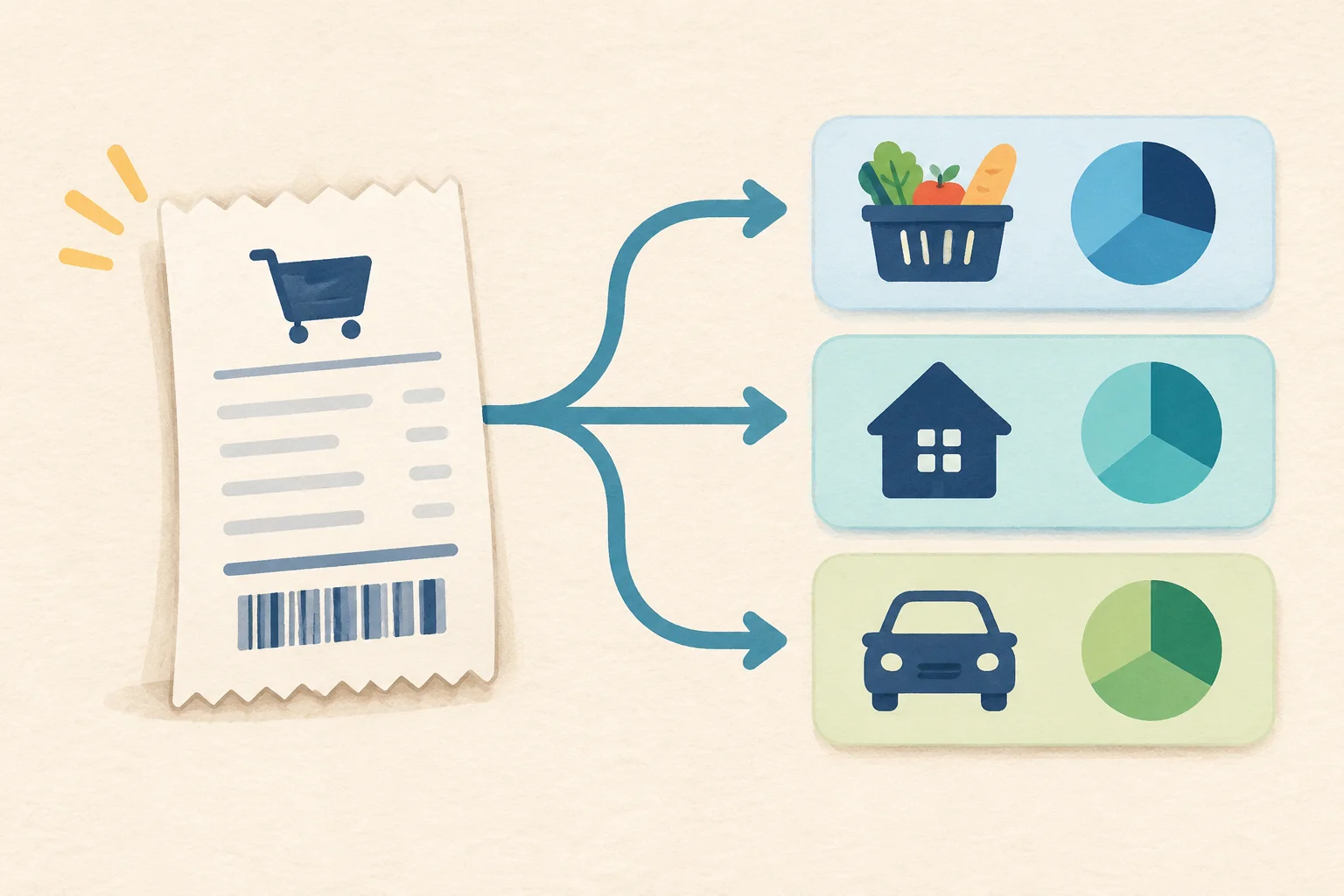
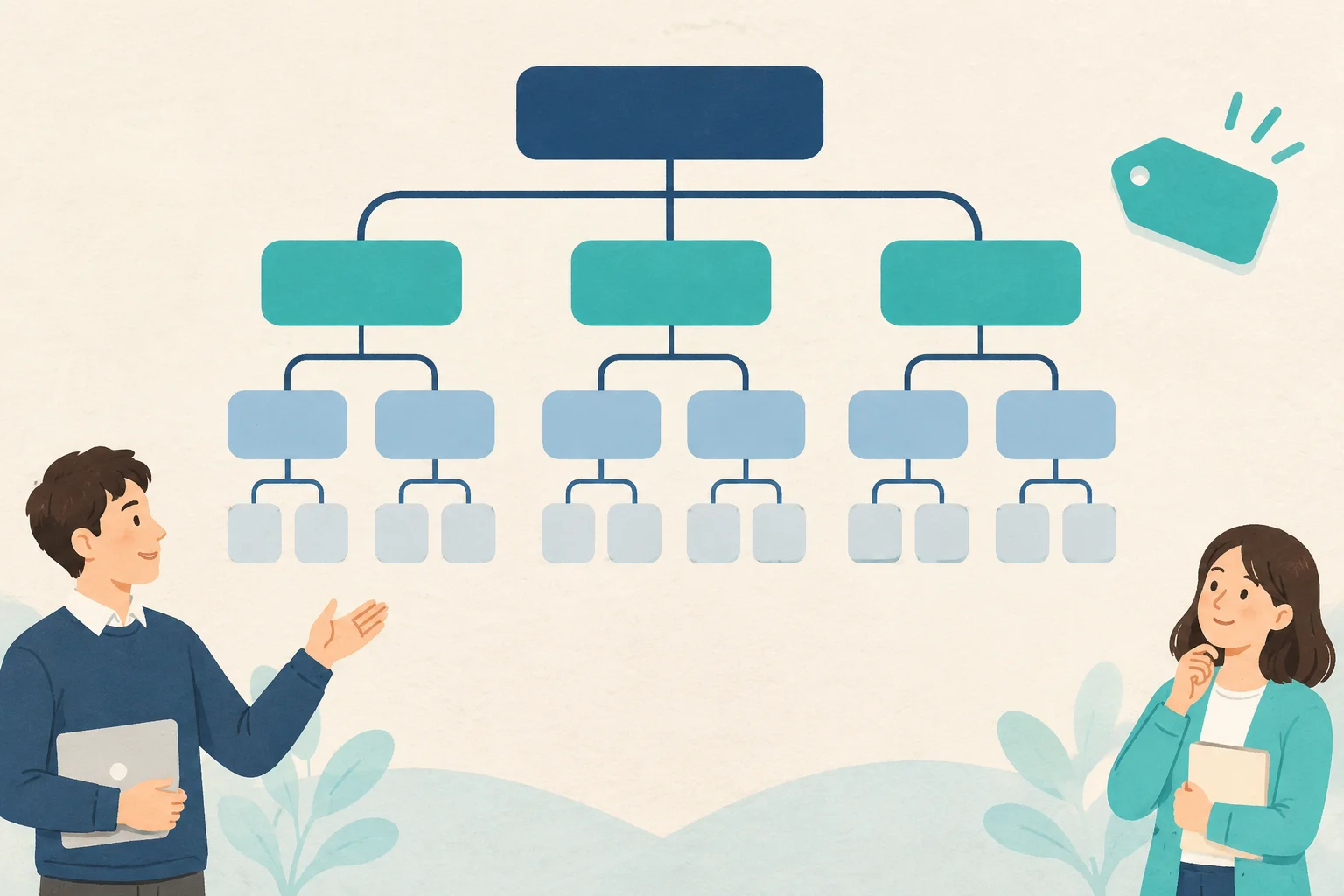
A useful hierarchy groups related transactions under a broad parent category, then uses child categories when the distinction improves review. In this fictional example, a household tracks everyday spending with three parent categories and six child categories. The names describe where the money went; they do not create extra transactions.
| Parent category | Child category | Example use |
|---|---|---|
| Food | Groceries | Ingredients and pantry items |
| Food | Dining | Cafe meals and takeout |
| Home | Household Supplies | Cleaning and paper goods |
| Home | Home Maintenance | Small repairs and materials |
| Transport | Fuel | Gas station purchases |
| Transport | Public Transit | Bus or train fares |
Swipe sideways to see all columns
Someone reviewing monthly spending can compare Food, Home, and Transport at a glance, then open a child category to understand the detail. A person who rarely reviews spending by subcategory may need only the parent categories; more detail is useful when it answers a recurring question.
Choose depth for a real decision
Parent categories provide a stable overview, while child categories distinguish spending that people want to track separately. Keep a child category when it changes a decision, such as separating dining from groceries to understand meal costs. For a small household budget, a short list with familiar names is often easier to apply consistently than several layers of narrow labels.
Tags serve a different purpose. A tag such as “work trip” can cross category boundaries and identify a context shared by fuel, meals, and lodging. It is a supplementary label, not another level between a parent and its children. Keeping those roles separate makes classification easier to explain and review.
Spot overlap and needless depth
Overly broad categories hide useful differences: placing groceries, restaurant meals, and household cleaners under one label makes later review less informative. Overly deep structures create the opposite problem. A chain such as Home, Supplies, Cleaning, Kitchen, and Sponges asks for distinctions that may rarely matter and can slow down routine entry.
- Overlapping labels: “Home Supplies” and “Household Supplies” may compete for the same purchase. Choose one clear destination.
- Inconsistent levels: Do not place a broad label beside narrow labels at the same level when they classify similar spending.
- Tags used as hierarchy: Keep a cross-cutting context label separate from parent and child categories.
- Detail without a use: Add a child category only when it supports a review or a practical choice.
When a transaction seems to fit two categories, clarify the definitions before adding another branch. A shared rule for a borderline purchase usually improves consistency more than another layer of categories.
Build around consistent choices
Start with the broad spending themes people actually review. Add child categories for distinctions that help them make sense of records, name each category in plain language, and check that similar purchases have a consistent home. A hierarchy is useful when different people can apply it without guessing and its detail answers real questions.